

Ford F150 Sluggish Acceleration

Experiencing engine hesitation or slow acceleration in your Ford F150 can be frustrating and potentially hazardous, especially during overtaking or at intersections.
These issues are indicative of an underlying problem that requires prompt attention to prevent further damage to your vehicle.
How this system works

A combustion engine vehicle relies on a precise fuel to air mixture for efficient operation. When an engine hesitates during acceleration, it often indicates an excessively lean fuel mixture.
Inefficiently running engines tend to exhibit hesitation that worsens over time. The engine control module plays a crucial role in this process by sending signals to the fuel injectors to control fuel consumption.
It determines the necessary fuel injection based on factors like vehicle speed and throttle position. Additionally, it communicates with the accelerator pedal position sensor, instructing the fuel injectors on the required fuel delivery.
To maintain the correct fuel mixture, the engine control module continuously monitors the activity of oxygen sensors (O2 sensors). If the module detects a leaner than recommended fuel mixture, it will reduce power and fuel efficiency.
The trouble code P0172 is triggered when an O2 sensor reports lean activity for more than three consecutive trips. A check engine light displaying the code P0172 typically comes with symptoms such as rough engine running, decreased power, hesitation during acceleration, poor fuel economy, and stumbling when reaching the desired speed.
Signs of a faulty O2 sensor include rough engine operation, transmission slipping in automatic transmissions, and engine stalling. If the check engine light and the P0172 trouble code are accompanied by these symptoms, it is advisable to seek assistance from a mechanic.
A malfunctioning oxygen sensor can indeed lead to acceleration hesitation. Even with well-maintained engines, issues can arise that negatively affect fuel economy and acceleration.
A common culprit behind hesitation and reduced gas mileage is a defective oxygen sensor. Many vehicle manufacturers recommend replacing these sensors in pairs.
The EPA onboard diagnostics program requires the oxygen sensor as a component of the emissions control system for gasoline-powered cars starting with the 1996 model year. The vehicle's fuel economy may suffer if this sensor is not functioning properly.
Causes for slow acceleration in Ford F150

Slow acceleration in a Ford F150 can be attributed to various factors. The most common ones include a clogged air filter, a dirty mass air flow sensor (MAF), a blocked fuel filter, fuel pump issues, a malfunctioning oxygen sensor, a dirty throttle body, worn spark plugs, and a clogged catalytic converter.
Less frequent causes may involve:
- a faulty throttle position sensor (TPS)
- malfunctioning ignition coils
- dirty fuel injectors
- a blocked engine oil filter
- transmission problems
- worn piston rings
- a blown head gasket
Clogged air filter

Your Ford F150 engine performance can be negatively impacted by a filthy air filter, which limits the passage of air. This lowers engine efficiency and raises fuel consumption.
A severely blocked air filter may even cause the engine to stall in some circumstances. Your F150 air filter replacement is an easy task that takes only a few minutes to execute and does not require any particular skills. Therefore, it is advised to inspect the air filter and replace it if necessary as the first action.
Dirty or faulty mass air flow sensor (MAF)

A malfunctioning or contaminated mass air flow sensor (MAF) in your Ford F150 can lead to a range of issues including power loss, uneven engine operation, erratic idling, misfires, and poor exhaust emissions often characterized by the presence of black smoke.
The MAF sensor is a vital component within the engine's intake system, situated between the air filter box and the throttle valve. Its role extends beyond power delivery as it also plays a crucial role in minimizing pollutant emissions from your F150.
Shop From Amazon


Clogged fuel filter

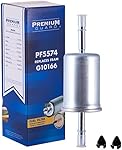
If your Ford F150 fuel filter is clogged and inhibits the flow of gasoline to the engine, you can experience power loss and jerky acceleration. In more extreme cases, running out of gas might even force the engine to shut off while the car is moving.
The engine check light will turn on when this happens, since the control unit of the car can identify the gasoline supply problem. When you connect an OBD2 scanner to your vehicle, you may observe error code P0087, indicating a fault within the fuel delivery system.
Clogged catalytic converter

The catalytic converter in the Ford F150 is a component of the exhaust system designed to convert harmful exhaust gases into less harmful byproducts, promoting environmental and health safety. As the vehicle accumulates mileage, these toxins can build up and potentially clog the catalytic converter over time.
Faulty oxygen sensor

The oxygen sensor in the Ford F150 is crucial for monitoring the quantity of pollutants present in the engine's exhaust gases. It sends this data to the control unit, which continuously adjusts the air to fuel ratio of the engine for peak performance.
In contrast, a damaged oxygen sensor may provide the control unit with erroneous data, which might lead to issues including delayed acceleration, power loss, unpredictable idling, engine reluctance, or even engine failure.
Dirty throttle body

A dirty throttle body can also be a culprit behind slow acceleration in your Ford F150. Common signs of a dirty throttle body include poor engine performance, erratic idling, unresponsive engine reactions to accelerator pedal inputs, and engine sputtering or stalling.
Throttle bodies tend to accumulate dirt and grime, particularly in vehicles with around 70,000 miles or those driven primarily in stop-and-go city traffic.
However, internal contamination can occur much earlier due to factors such as air leaks in the intake system or engine malfunctions.
The throttle valve, responsible for regulating the air supply to the internal combustion engine, can become clogged with dirt and debris over time.
This buildup hinders the proper movement of the throttle valve, leading to difficulties in controlling the air supply and subsequently affecting engine performance.
Faulty throttle position sensor (TPS)

The throttle position sensor, or TPS, plays a crucial role in determining the throttle valve's opening angle. It collects this data and transmits it to the control unit, aiding in the calculation of the required fuel amount.
Signs of a faulty throttle position sensor in the F150 typically include decreased engine performance, engine jerking, rpm fluctuations at idle, and a gradual decrease in speed after releasing the accelerator.
When you encounter an error code ranging from P0120 to P0124 on an OBD2 scanner, it signifies an issue with the TPS sensor.


